 11
11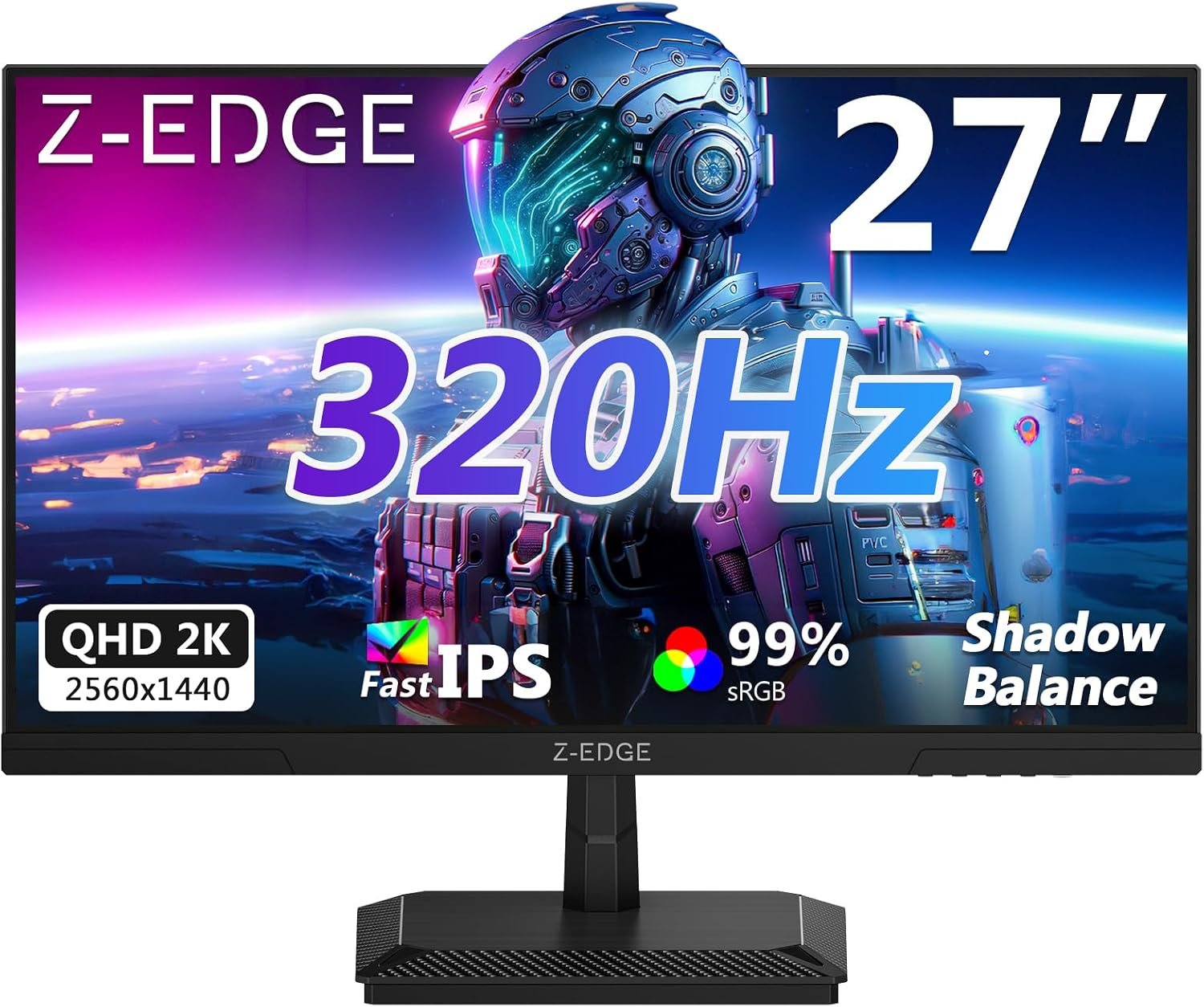
In the rapidly evolving landscape of gaming technology, the demand for displays that can keep pace with high-performance graphics cards and competitive gameplay has never been greater. Modern gaming monitors are no longer just screens; they are critical components that can significantly influence a player’s experience and performance. The evolution from standard refresh rates and resolutions to high refresh rate, low response time panels at resolutions like QHD (2560×1440) represents a monumental leap, offering a visual fidelity and responsiveness that was once confined to professional esports arenas.
The need for such advanced tools stems from the increasing complexity and speed of contemporary video games. Whether it’s tracking fast-moving targets in a first-person shooter, executing precise maneuvers in a real-time strategy game, or simply immersing oneself in the breathtaking visuals of a graphically intensive adventure, a capable monitor is paramount. It bridges the gap between the raw processing power of a gaming PC and the human eye, translating frames into fluid motion and crisp detail. Without a display that can deliver frames quickly and clearly, even the most powerful gaming rig can feel underutilized, leading to a suboptimal experience characterized by motion blur, input lag, and screen tearing.
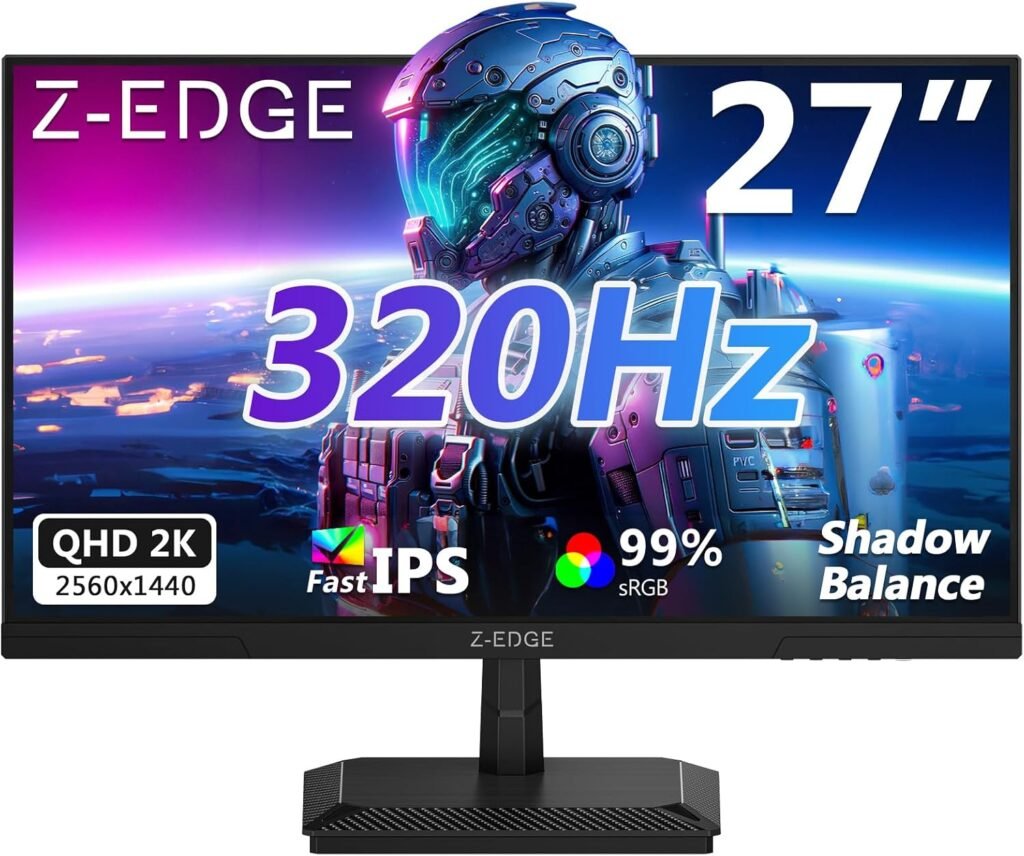
The Z-Edge 27 inch Gaming Monitor (specifically the UG27QS model, which aligns with the provided specifications) positions itself as a compelling solution within this demanding segment. It aims to democratize high-performance gaming by offering a blend of QHD resolution, a 240Hz refresh rate, and a Fast IPS panel at a price point that challenges many established brands. This monitor is engineered for individuals who prioritize core gaming performance—smoothness, clarity, and responsiveness—above all else, making it a noteworthy contender for competitive gamers and enthusiasts looking to upgrade without breaking the bank.
The Z-Edge 27 inch Gaming Monitor (UG27QS) is a QHD (2560×1440) Fast IPS display featuring a blazing 240Hz refresh rate and 1ms MPRT response time, making it an excellent budget-friendly choice for competitive gamers seeking high-performance visuals and responsiveness. It provides a solid foundation for esports titles and general gaming, though its stand is basic and HDR capabilities are limited.
Sponsored affiliate link • Real-time details and availability on Amazon
The Z-Edge 27 inch Gaming Monitor (UG27QS) is a testament to how far display technology has come, particularly for the competitive gaming segment. Its technical architecture is specifically designed to deliver a high-speed, high-resolution visual experience that is crucial for modern esports and immersive gaming. Understanding these core components is key to appreciating its value proposition.
At the heart of the Z-Edge UG27QS is its Fast IPS (In-Plane Switching) panel. IPS technology is traditionally known for its superior color accuracy and wide viewing angles compared to older panel types like TN (Twisted Nematic) or VA (Vertical Alignment). However, conventional IPS panels often struggled with response times, leading to motion blur in fast-paced content. Fast IPS, as implemented in this monitor, addresses this limitation by optimizing the liquid crystal structure to achieve significantly faster pixel transitions. This results in a panel that combines the excellent color reproduction and broad viewing angles of IPS with the low response times necessary for competitive gaming. The 120% sRGB color gamut coverage further ensures vibrant and accurate colors, making games and other media visually appealing [newegg.com](https://www.newegg.com/z-z-edge-ug27qs-27-qhd-240hz-gamers-line-ips/p/3D4-004G-00073).
This panel type strikes a fine balance, offering a visual experience that is both responsive for competitive play and aesthetically pleasing for single-player titles or media consumption. The 178-degree horizontal and vertical viewing angles mean that colors and contrast remain consistent even when viewed from oblique positions, which is beneficial for multi-monitor setups or when sharing the screen with others. The flat panel design ensures uniformity across the screen, avoiding the geometric distortions sometimes associated with curved displays, which can be critical for tasks requiring precise visual alignment.
The most standout feature for competitive gamers is undoubtedly the 240Hz native refresh rate, achievable via DisplayPort 1.4. A higher refresh rate means the screen updates more frequently, presenting more up-to-date visual information to the player. This translates directly into smoother motion, reduced ghosting, and a more immediate sense of control in games. Coupled with this is a rapid 1ms MPRT (Moving Picture Response Time) or 3ms GtG (Grey-to-Grey) response time. MPRT measures how long a pixel remains visible, often achieved through backlight strobing, which can enhance motion clarity at the cost of brightness. GtG measures the time it takes for a pixel to change from one shade of grey to another, representing the actual pixel transition speed. Both metrics are excellent for minimizing motion blur and ensuring that fast-moving objects appear crisp and clear on screen [newegg.com](https://www.newegg.com/z-z-edge-ug27qs-27-qhd-240hz-gamers-line-ips/p/3D4-004G-00073).
The combination of these two specifications is what makes this monitor a serious contender for esports enthusiasts. In titles where every millisecond counts, the ability to see enemy movements and react faster provides a tangible competitive advantage. While 1ms MPRT mode can introduce some noticeable strobing and a brightness reduction, its clarity benefits in a darkened competitive environment are genuinely impressive for the price point, often rivaling panels in a higher cost bracket [gamingreviewguide.com](https://gamingreviewguide.com/zedge-27-inch-240hz-gaming-monitor-2k-qhd-1440p-fast-ip-review-g4rc/).
Offering a 2560×1440 resolution on a 27-inch screen, the Z-Edge UG27QS provides a significant visual upgrade over traditional 1080p displays. QHD resolution delivers a much sharper image with more desktop real estate, enhancing productivity for non-gaming tasks and bringing finer details to life in games. This resolution strikes an optimal balance between visual fidelity and performance demands. While 4K offers even greater detail, it requires substantially more GPU power to drive high frame rates, which can be prohibitive for many gamers. 1440p, conversely, is achievable at high frame rates (like 240Hz) with mid-range to high-end graphics cards, making it an ideal sweet spot for a wide audience [gamingreviewguide.com](https://gamingreviewguide.com/zedge-27-inch-240hz-gaming-monitor-2k-qhd-1440p-fast-ip-review-g4rc/).
The increased pixel density of approximately 109 pixels per inch (PPI) ensures that text is crisp and game environments are rendered with impressive clarity, without the need for aggressive scaling that can sometimes soften images. This makes the monitor versatile, performing admirably for both competitive gaming and visually rich single-player experiences, where immersion benefits greatly from higher detail. The QHD resolution also provides ample space for multitasking, allowing users to comfortably arrange multiple windows side-by-side.
To combat screen tearing and stuttering, the Z-Edge UG27QS incorporates Adaptive Sync technology, making it compatible with both AMD FreeSync and NVIDIA G-SYNC. This feature dynamically adjusts the monitor’s refresh rate to match the GPU’s frame output, ensuring a smooth, tear-free visual experience across a wide range of frame rates (48-240Hz). This is particularly beneficial in situations where frame rates fluctuate, preventing jarring visual artifacts that can distract from gameplay. The implementation of Adaptive Sync on this monitor is reported to be robust, maintaining fluidity without the stuttering sometimes seen in cheaper solutions [newegg.com](https://www.newegg.com/z-z-edge-ug27qs-27-qhd-240hz-gamers-line-ips/p/3D4-004G-00073).
Additionally, the monitor supports HDR10 (High Dynamic Range). While HDR10 support is present, it’s important to set realistic expectations. With a typical brightness of 400 nits and a static contrast ratio of 1000:1, the monitor does not offer the profound contrast and peak brightness levels required for a truly impactful HDR experience. In practice, its HDR functionality is more of a minor enhancement to color and detail in supported content, rather than a transformative visual upgrade. For serious HDR enthusiasts, monitors with higher VESA DisplayHDR certifications (e.g., DisplayHDR 600 or 1000) and full-array local dimming would be necessary, albeit at a significantly higher cost [gamingreviewguide.com](https://gamingreviewguide.com/zedge-27-inch-240hz-gaming-monitor-2k-qhd-1440p-fast-ip-review-g4rc/).
The monitor offers a comprehensive suite of connectivity options, including two DisplayPort 1.4 inputs and two HDMI 2.0 inputs, alongside a 3.5mm audio output jack. The DisplayPort 1.4 connections are essential for achieving the full 240Hz refresh rate at 1440p, while the HDMI 2.0 ports can support up to 144Hz at the same resolution. This array of ports ensures compatibility with a wide range of modern graphics cards and gaming consoles, allowing for flexible multi-device setups. The inclusion of a headphone jack provides a convenient way to route audio directly from the monitor to external speakers or headphones [newegg.com](https://www.newegg.com/z-z-edge-ug27qs-27-qhd-240hz-gamers-line-ips/p/3D4-004G-00073).
However, one area where the Z-Edge UG27QS makes compromises to achieve its aggressive price point is its stand. The bundled stand is a basic, tilt-only (-5 to +15 degrees) design made of relatively light plastic. It lacks height adjustment, swivel, or pivot functionality, which are crucial for achieving an ergonomically comfortable viewing position. For users prioritizing proper posture and viewing angles, investing in a separate VESA-compatible monitor arm (100x100mm) is highly recommended. This allows for full adjustability and can significantly enhance the overall user experience, transforming a budget setup into a more professional and comfortable one [gamingreviewguide.com](https://gamingreviewguide.com/zedge-27-inch-240hz-gaming-monitor-2k-qhd-1440p-fast-ip-review-g4rc/).
| Specification | Detail |
|---|---|
| Screen Size | 27 inches |
| Resolution | 2560 x 1440 (QHD/2K) |
| Panel Type | Fast IPS |
| Refresh Rate | 240Hz native (DisplayPort 1.4) |
| Response Time | 1ms MPRT / 3ms GtG |
| Brightness | 400 nits typical |
| Contrast Ratio | 1000:1 |
| Color Gamut | 120% sRGB |
| Adaptive Sync | FreeSync, G-SYNC Compatible |
| HDR Support | HDR10 |
| Video Inputs | 2x DisplayPort 1.4, 2x HDMI 2.0 |
| Audio Output | 3.5mm Headphone Jack |
| VESA Mount | 100x100mm |
| Stand Adjustments | Tilt (-5 to +15 degrees) |
| Power Consumption | 40W |
| Warranty (Registered) | 24 months for monitors |
The Z-Edge 27 inch Gaming Monitor (UG27QS) is a versatile display, primarily engineered for gaming, but its specifications also lend themselves well to various other daily computing tasks. Its combination of high resolution, fast refresh rate, and good color reproduction makes it suitable for a range of practical scenarios, from competitive esports to general productivity.
This monitor excels in competitive gaming environments. The 240Hz refresh rate and 1ms MPRT response time are crucial for titles like Counter-Strike 2, Valorant, Apex Legends, and Overwatch 2, where split-second reactions and clear motion tracking are paramount. The high refresh rate ensures that every frame rendered by a powerful GPU is displayed with minimal delay, providing a distinct advantage in fast-twitch scenarios. Players can track enemy movements more precisely, react to visual cues faster, and experience significantly reduced input lag compared to lower refresh rate monitors [gamingreviewguide.com](https://gamingreviewguide.com/zedge-27-inch-240hz-gaming-monitor-2k-qhd-1440p-fast-ip-review-g4rc/). The QHD resolution also provides a sharp image without the heavy performance cost of 4K, allowing for high frame rates even on modern mid-range to high-end graphics cards like an RTX 5070 Ti, as noted in testing [gamingreviewguide.com](https://gamingreviewguide.com/zedge-27-inch-240hz-gaming-monitor-2k-qhd-1440p-fast-ip-review-g4rc/).
The Fast IPS panel, with its wide viewing angles and vibrant colors, ensures that competitive games not only run smoothly but also look good. While the focus is on performance, the visual quality is not sacrificed. The FreeSync and G-SYNC Compatible support further guarantees a tear-free experience, which is vital for maintaining focus during intense gameplay. This synchronized rendering prevents visual artifacts that can break immersion and distract players, ensuring a consistent and fluid visual flow even when frame rates fluctuate within the monitor’s adaptive sync range.
Beyond the competitive arena, the Z-Edge UG27QS also enhances single-player and story-driven games. The 27-inch QHD display offers a detailed and immersive visual canvas, making environments, character models, and textures appear crisp and lifelike. Games that rely heavily on graphical fidelity, such as open-world RPGs or cinematic adventures, benefit greatly from the increased pixel density over 1080p. While the 240Hz refresh rate might not be fully utilized in these less demanding titles, the inherent smoothness it provides still contributes to a more polished and enjoyable experience, free from the choppiness often associated with lower refresh rates.
The 120% sRGB color gamut coverage ensures that the rich color palettes of modern games are accurately and vibrantly reproduced. This leads to a more engaging and visually stunning experience, pulling players deeper into the game worlds. Although its HDR capabilities are limited, the monitor’s strong sRGB performance and QHD resolution still deliver a high-quality visual output that will satisfy most gamers looking for a balanced display for both competitive and immersive play.
For daily computing tasks, the Z-Edge UG27QS proves to be a highly capable monitor. The 27-inch screen size combined with QHD resolution provides ample screen real estate, allowing users to comfortably open and arrange multiple windows side-by-side without feeling cramped. This is particularly useful for professionals who frequently work with documents, spreadsheets, web browsers, and communication tools simultaneously. The higher pixel density also means text appears sharper and more defined, reducing eye strain during long hours of work.
The wide viewing angles of the Fast IPS panel are also beneficial for productivity, ensuring consistent image quality even if a user shifts their position or needs to quickly reference information from a side angle. While the basic stand might require an upgrade for optimal ergonomics in a professional setup, the core display panel itself offers a clear, vibrant, and spacious workspace that enhances efficiency for a variety of non-gaming applications, including content creation, coding, or general office work.
Watching movies, streaming shows, or viewing photos on the Z-Edge UG27QS is a pleasant experience. The QHD resolution provides a crisp image, and the 120% sRGB coverage ensures that colors are rich and accurate, making visual media pop. While it doesn’t offer true HDR, the overall picture quality is still excellent for casual viewing. The 27-inch size is also a good sweet spot for personal entertainment, providing an immersive view without being overly large for a desk setup.
The smooth motion capabilities, a byproduct of its high refresh rate, also benefit video playback by reducing judder and ensuring fluid motion in fast-paced action sequences. While not its primary purpose, the monitor’s visual characteristics make it a strong contender for anyone who enjoys consuming a variety of digital media on their computer, offering a significant upgrade over standard 1080p office monitors.
The Z-Edge 27 inch Gaming Monitor (UG27QS) caters to a specific segment of the market, offering a compelling blend of features for individuals with particular needs and budget considerations. Understanding its target audience is crucial for potential buyers to determine if it aligns with their requirements.
This monitor is an excellent choice for the Budget-Conscious Competitive Gamer. If your primary goal is to achieve the highest possible frame rates and motion clarity in esports titles like Valorant, CS2, or Overwatch 2, but you don’t have the budget for premium brands costing $300-$400+, the Z-Edge UG27QS offers an exceptional performance-per-dollar value [gamingreviewguide.com](https://gamingreviewguide.com/zedge-27-inch-240hz-gaming-monitor-2k-qhd-1440p-fast-ip-review-g4rc/). It provides the core specifications—240Hz QHD Fast IPS with low response times—that are critical for competitive play, allowing you to invest savings into other peripherals like a better mouse, headset, or keyboard.
It’s also ideal for Gamers Upgrading from 1080p/144Hz. Many gamers currently using 1080p monitors at 144Hz or 165Hz are looking to step up to 1440p without sacrificing high refresh rates. The UG27QS offers this exact upgrade path, providing a noticeable bump in visual fidelity with QHD resolution while maintaining or even increasing the refresh rate to 240Hz. This allows for a sharper image without compromising the fluid gameplay they’ve grown accustomed to [gamingreviewguide.com](https://gamingreviewguide.com/zedge-27-inch-240hz-gaming-monitor-2k-qhd-1440p-fast-ip-review-g4rc/).
The monitor is also suitable for Enthusiasts with Mid-Range to High-End GPUs who can comfortably drive 1440p at high frame rates. While a powerful GPU is needed to consistently hit 240fps at QHD in demanding titles, even a mid-range card can achieve high frame rates in esports titles or deliver excellent performance in single-player games with adjusted settings. The monitor provides the headroom to fully utilize the capabilities of such hardware, especially with Adaptive Sync ensuring tear-free visuals.
However, the Z-Edge UG27QS may not be suitable for everyone. It is generally not recommended for Professional Content Creators or Photographers who require extremely accurate color calibration, wide Adobe RGB or DCI-P3 coverage, and true HDR capabilities. While its sRGB coverage is good, it lacks the advanced features and calibration options found in professional-grade monitors. Similarly, those who prioritize Premium Build Quality and Ergonomics Out-of-the-Box might find the basic stand and somewhat dated OSD navigation to be a drawback [gamingreviewguide.com](https://gamingreviewguide.com/zedge-27-inch-240hz-gaming-monitor-2k-qhd-1440p-fast-ip-review-g4rc/). For these users, investing in a more expensive monitor from a premium brand with a fully adjustable stand and more refined user interface might be a better fit, despite the higher cost.
Acquiring a new gaming monitor involves more than just looking at the headline specifications. For the Z-Edge 27 inch Gaming Monitor (UG27QS), several practical considerations can significantly impact the overall user experience and long-term satisfaction. Understanding these nuances before making a purchase is vital for conscious consumers.
One of the most frequently noted aspects of the Z-Edge UG27QS is its bundled stand. It is a basic, tilt-only unit (-5 to +15 degrees) crafted from relatively light plastic, and it conspicuously lacks height, swivel, or pivot adjustments. For users who spend prolonged periods in front of their monitor, ergonomic adjustability is not merely a luxury but a necessity for preventing discomfort and maintaining proper posture. Without these adjustments, users may find themselves craning their neck or adjusting their chair in suboptimal ways to achieve a comfortable viewing angle. This can lead to neck strain, eye fatigue, and overall reduced comfort during extended gaming sessions or work. Therefore, a crucial consideration for potential buyers is the additional investment in a third-party VESA-compatible monitor arm (100x100mm). This upgrade can significantly enhance the monitor’s usability, allowing for precise positioning and a much more ergonomic setup, effectively transforming a budget-conscious purchase into a more comfortable and sustainable long-term solution [gamingreviewguide.com](https://gamingreviewguide.com/zedge-27-inch-240hz-gaming-monitor-2k-qhd-1440p-fast-ip-review-g4rc/).
The decision to opt for a basic stand is a common cost-saving measure for manufacturers aiming to hit aggressive price points. While it helps keep the initial purchase cost low, it shifts the responsibility for ergonomic comfort to the user. Factor in the cost and effort of acquiring and installing a VESA arm when budgeting for this monitor. This proactive approach ensures that the initial savings aren’t overshadowed by ergonomic discomfort or the need for a rushed, unplanned accessory purchase down the line. A good monitor arm not only provides adjustability but can also free up valuable desk space, contributing to a cleaner and more organized setup.
To fully leverage the 240Hz refresh rate at QHD (2560×1440) resolution, a capable graphics card is essential. While the monitor itself offers these high specifications, the actual frame rates achieved in games are dependent on the user’s GPU. For demanding AAA titles, even high-end graphics cards may struggle to consistently hit 240 frames per second at QHD resolution, especially on ultra settings. Competitive esports titles, however, are typically less graphically intensive, making it more feasible to reach and maintain high frame rates with a mid-range to high-end GPU. Users with older or less powerful graphics cards might find themselves unable to fully utilize the monitor’s potential, resulting in a suboptimal experience where the monitor is bottlenecked by the GPU.
Before purchasing, it is advisable to research benchmarks for your specific GPU and the games you intend to play, focusing on 1440p resolution and desired frame rates. While the Adaptive Sync feature (FreeSync/G-SYNC Compatible) helps to smooth out frame rate fluctuations, consistently low frame rates will still detract from the experience. This monitor shines when paired with hardware that can feed it a steady stream of high frames, ensuring that the investment in its high refresh rate and resolution capabilities is truly justified. Users should aim for a GPU that can deliver at least 100-144+ FPS in their preferred titles to make the most of this display.
The Z-Edge UG27QS supports HDR10, but it is crucial to understand that this is a basic implementation rather than a true high dynamic range experience. With a typical brightness of 400 nits and a standard 1000:1 contrast ratio, it lacks the peak brightness, local dimming zones, and wide color gamut (beyond sRGB) found in monitors designed for professional HDR content creation or premium HDR consumption. For most users, this means that HDR content will appear slightly enhanced in terms of color and overall vibrancy, but it won’t deliver the stark contrast, deep blacks, and brilliant highlights that characterize true HDR displays. Those expecting a transformative HDR experience similar to high-end TVs or professional monitors will likely be disappointed [gamingreviewguide.com](https://gamingreviewguide.com/zedge-27-inch-240hz-gaming-monitor-2k-qhd-1440p-fast-ip-review-g4rc/).
For general gaming and media consumption, the monitor’s color accuracy within the sRGB space is quite good, covering 120% of the sRGB gamut. This ensures vibrant and generally accurate colors for most everyday use cases. However, for tasks requiring precise color calibration, such as graphic design, video editing, or photography, the monitor may not meet the stringent requirements of professional workflows. These applications often demand broader color space coverage (e.g., Adobe RGB, DCI-P3) and factory calibration reports, which are typically found in higher-priced, specialized displays. For the target audience of competitive gamers, the sRGB performance is more than adequate, but it’s an important distinction for others.
As with many budget-friendly brands, there can be a phenomenon known as the ‘panel lottery’ with the Z-Edge UG27QS. This refers to the variability in panel quality from unit to unit, where some buyers may receive a flawless panel, while others might encounter minor issues such as backlight bleed, dead pixels, or stuck pixels. While Z-Edge’s warranty support has reportedly improved over time, this is a factor to consider when purchasing. The standard warranty is 12 months, but it can be extended to 24 months for monitors if the product is registered on their official website within 30 days of receipt, which is a commendable offering for a budget brand [z-edge.com](https://www.z-edge.com/products/ug27qs).
It is prudent for buyers to thoroughly inspect their monitor upon arrival for any potential panel defects. Understanding the warranty terms and the process for returns or replacements is also important. Z-Edge offers a 30-day money-back guarantee, providing a window to evaluate the product and ensure it meets expectations [z-edge.com](https://www.z-edge.com/products/ug27qs). While most units will likely be perfectly fine, being aware of the possibility of variance and knowing the recourse options can save frustration should an issue arise. This proactive approach to checking the panel and understanding warranty coverage is a sensible step for any monitor purchase, especially in the budget segment.
Sponsored affiliate link • Real-time details and availability on Amazon
Understanding where the Z-Edge 27 inch Gaming Monitor (UG27QS) fits within the broader monitor market requires a comparison against different categories of displays. This helps to contextualize its feature set and value proposition, clarifying why it might be the ideal choice for some, while others might benefit from a different tier of product.
Entry-level gaming monitors typically offer 1080p resolution with refresh rates ranging from 120Hz to 165Hz, often utilizing VA (Vertical Alignment) or TN (Twisted Nematic) panel technologies. While these monitors are highly affordable and provide a significant upgrade over standard 60Hz displays, they come with notable compromises. TN panels offer extremely fast response times but suffer from poor color reproduction and narrow viewing angles. VA panels provide excellent contrast ratios and deeper blacks but often struggle with slower response times, leading to noticeable ghosting or smearing in fast-paced games. The Z-Edge UG27QS, by contrast, offers a superior QHD resolution, a higher 240Hz refresh rate, and a Fast IPS panel. This means it delivers a much sharper image, smoother motion, and better color accuracy and viewing angles than most entry-level alternatives, justifying its slightly higher, yet still budget-friendly, price point. It represents a substantial leap in overall visual quality and competitive performance compared to these foundational options.
For gamers stepping up from these entry-level displays, the Z-Edge UG27QS provides a comprehensive upgrade across all key metrics: resolution, refresh rate, response time, and panel type. The transition from 1080p to 1440p on a 27-inch screen is immediately noticeable in terms of clarity and desktop space. The jump from 144Hz to 240Hz, coupled with the Fast IPS response, results in a significantly more fluid and responsive gaming experience, crucial for competitive play. This monitor essentially bridges the gap between budget and high-performance, offering premium features at a price that entry-level users can aspire to without breaking into the significantly more expensive premium tier.
Premium gaming monitors in the QHD 240Hz+ category, often from brands like LG, MSI, or Gigabyte, typically retail for $279-$349 or more. While they share core specifications like QHD resolution and 240Hz refresh rates, they differentiate themselves with superior build quality, more robust and ergonomically advanced stands, better HDR implementations (often with VESA DisplayHDR 600/1000 certifications), and more refined on-screen display (OSD) interfaces. These monitors might also offer better factory calibration, more advanced overdrive settings, and potentially longer warranty periods (e.g., 3 years versus Z-Edge’s 2 years after registration) [gamingreviewguide.com](https://gamingreviewguide.com/zedge-27-inch-240hz-gaming-monitor-2k-qhd-1440p-fast-ip-review-g4rc/). The Z-Edge UG27QS makes strategic cuts in these areas to achieve its lower price point, notably with its basic stand and decorative HDR. You are essentially trading brand recognition, peripheral features, and some quality-of-life improvements for significant savings.
For users who value every aspect of their display setup, including the tactile feel of the buttons, the stability and adjustability of the stand, and true HDR performance for cinematic single-player games, a premium monitor might be a more satisfying investment. However, if the primary objective is raw competitive performance—getting the best possible panel for fast-paced gaming—the Z-Edge UG27QS offers nearly identical core panel performance (QHD, 240Hz, Fast IPS, 1ms MPRT) at a substantially lower cost. The savings of $80-$150 can then be reallocated to a high-quality VESA arm, a better gaming mouse, or other components, effectively creating a high-performance setup that is more budget-efficient [gamingreviewguide.com](https://gamingreviewguide.com/zedge-27-inch-240hz-gaming-monitor-2k-qhd-1440p-fast-ip-review-g4rc/).
Ultrawide monitors (e.g., 3440×1440) offer a significantly more immersive field of view, ideal for racing simulators, flight sims, and certain RPGs. However, they typically come at a higher cost, require more GPU power to drive, and often have lower refresh rates compared to the Z-Edge UG27QS (e.g., 144Hz or 165Hz instead of 240Hz). The wider aspect ratio can also be less suitable for competitive esports, where a standard 16:9 ratio is often preferred for optimal FOV and UI placement. 4K gaming monitors (3840×2160) provide unparalleled detail and clarity, but they demand extreme GPU power to maintain high frame rates, making 240Hz at 4K a very expensive and hardware-intensive proposition. Even 144Hz at 4K can push the limits of top-tier GPUs.
The Z-Edge UG27QS strikes a balance by offering a high refresh rate and a resolution that is both visually pleasing and attainable with more common gaming hardware. It avoids the compromises in refresh rate often found in ultrawide displays and the extreme hardware demands of 4K. For competitive gamers, the 16:9 aspect ratio and 240Hz refresh rate are often prioritized over the expansive but performance-heavy visuals of ultrawide or 4K. The 1440p resolution provides a good middle ground, offering a sharp image without the prohibitive cost or performance hit associated with higher resolutions, making it a more practical choice for a broader range of gamers.
The Z-Edge 27 inch Gaming Monitor (UG27QS) emerges as a highly competitive and compelling option for a specific segment of the gaming community in 2026. It represents a strategic engineering effort to deliver core high-performance gaming specifications—QHD resolution, a 240Hz refresh rate, and a Fast IPS panel with rapid response times—at an exceptionally accessible price point. For the budget-conscious competitive gamer, this monitor provides an opportunity to experience a level of fluidity and visual clarity that was, until recently, confined to significantly more expensive displays. Its ability to render fast-paced action with minimal motion blur and input lag, coupled with adaptive sync support, positions it as a genuine tool for enhancing in-game performance.
However, it is crucial for potential buyers to approach this monitor with a clear understanding of its trade-offs. The basic, non-ergonomic stand is the most significant compromise, almost necessitating an additional investment in a VESA arm for optimal comfort and adjustability. Similarly, while HDR10 is supported, its implementation is rudimentary and should not be a primary reason for purchase. These are not flaws in its intended purpose but rather conscious decisions to keep the cost down and prioritize the core display panel. By being aware of these aspects, consumers can make an informed decision, budgeting for necessary accessories or adjusting expectations regarding premium features.
Ultimately, the Z-Edge 27 inch Gaming Monitor offers an undeniable value proposition for its target audience: the competitive gamer who prioritizes raw performance and is willing to invest separately in ergonomics or forgo luxurious features. It stands as a testament to the fact that high-refresh-rate, high-resolution gaming is becoming increasingly attainable. For those looking to upgrade from older, lower-spec monitors and enter the realm of QHD 240Hz gaming without a substantial financial outlay, the UG27QS provides a robust and performance-driven foundation upon which to build a formidable gaming setup, maximizing durability and long-term value through informed utilization and maintenance.
*Product availability, detailed specifications, bundled accessories, and shipping conditions are subject to real-time updates on Amazon.